
Camp County Arrest History
An arrest in Camp County can start with the Camp County Sheriff, Pittsburg Police, Texas DPS Highway Patrol, a constable, or another state or federal agency. The arresting officer creates the incident or arrest report and probable-cause material. If the person is booked locally, the sheriff creates intake, fingerprint, charge, bond, and custody records. A magistrate records warnings, probable cause, and bond. Only later does a prosecutor decide whether to file, change, or reject a charge.
Those parts stay with different custodians. Pittsburg Police retains a city arrest narrative it created, even if the Camp County Sheriff handled the booking. The sheriff holds its booking sheet even when another agency made the arrest. After filing, the correct court clerk holds the charging instrument, docket, and outcome. A statewide DPS cycle depends on fingerprint and disposition reports reaching the repository. One search result rarely contains the whole Camp County arrest history.
Camp County Current Booking Call
Camp County does not publish an official inmate roster, booking log, dedicated inmate line, or online arrest gallery. The verified first contact is the Sheriff at 903-856-6651. Ask whether the person is now held at 203 Tapp Street in Pittsburg, has been released, or was housed or transferred elsewhere. Accurate spelling and an approximate arrest time help. The county's 2026 budget funds three jailer positions and reflects a history of out-of-county housing, so physical location should never be assumed.
The official Camp County Sheriff page provides the main contact and directs custody users to VINELink.
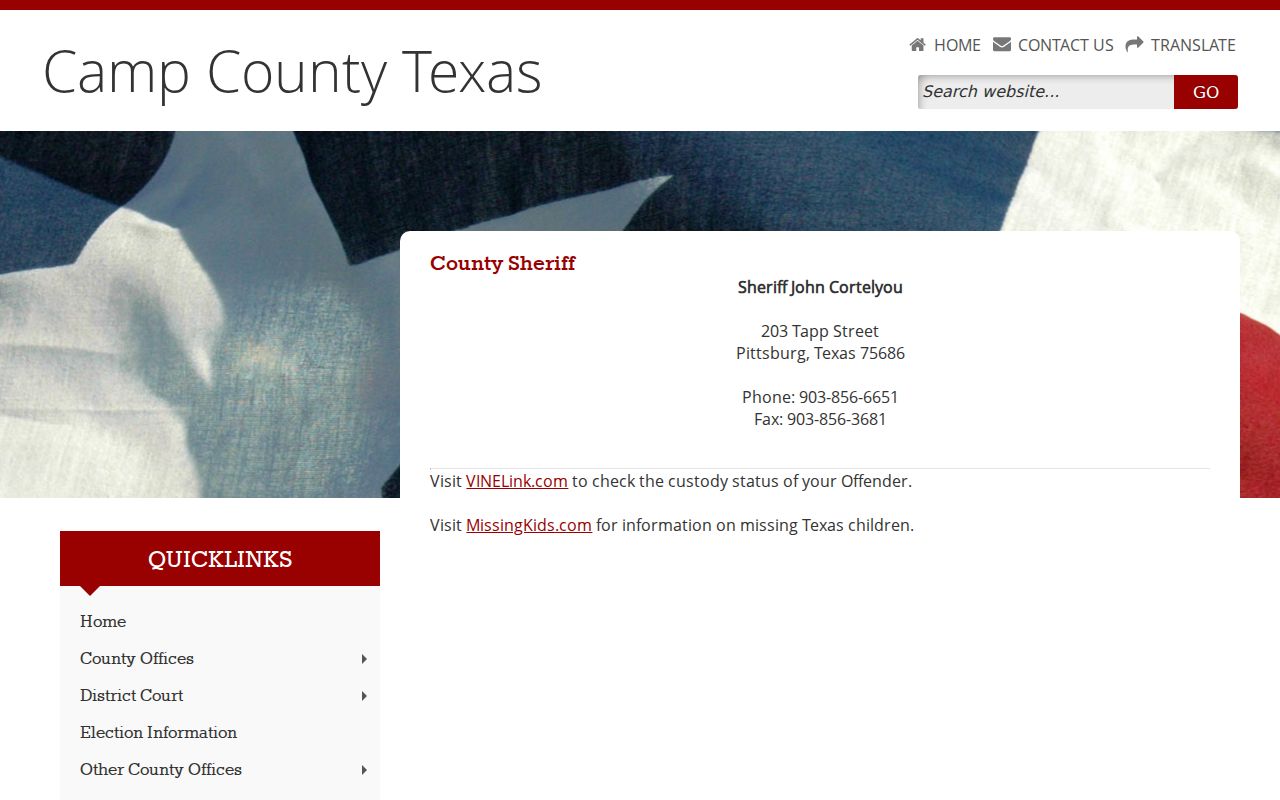
The sheriff page confirms the local starting point but does not replace a narrow request for the actual booking or arrest record.
Camp County Sheriff and Jail
203 Tapp Street
Pittsburg, TX 75686
903-856-6651
Fax: 903-856-3681
Looking Up Camp County Arrests
No single Camp County database covers present custody, the police narrative, filed charges, and the final outcome. The best chain starts with current custody, then moves to the record producer. Use a clerk only after a prosecutor has filed a case. Use DPS as a later statewide disposition source, not as a live booking log. Each step answers a distinct question.
- Search VINELink under Texas with accurate spelling, and register for notifications if a matching custody record appears.
- Call or visit the Camp County Sheriff to confirm current location, release, transfer, and which agency made the arrest.
- Request the arrest or incident report from the arresting agency, then request the separate booking record from the sheriff when booking occurred through Camp County.
- After filing, ask the proper clerk for the cause number, charge, status, and disposition. Felonies go to the District Clerk; constitutional County Court misdemeanors go to the County Clerk.
- Use the DPS Criminal History Conviction Name Search for public Texas conviction and deferred-adjudication information, or the fingerprint self-review route when identity certainty is needed.
- For material that is not online, send a narrow Texas Public Information Act request to the office that created the record and ask for a cost estimate.
Note: A blank custody search can reflect release, transfer, delay, spelling, or nonparticipation and does not prove that no arrest occurred.
Camp County VINELink Custody Search
VINELink is the only public custody service linked by the Camp County Sheriff. It can help check participating custody data and set notifications, but it is not a county rap sheet or a complete booking archive. Select Texas, enter the available identity details, and review any match with care. The absence of a Camp County result can have several causes, including a release, transfer, data delay, or a person being held through another arrangement.
The manifest image comes from the official VINELink custody and notification entry.
VINELink works best as a first check followed by a call to Camp County for the actual location and producing agency.
Inside a Camp County Arrest Record
A Camp County arrest record can contain both the officer's account and the jail's intake data, but public release may not include every field. Common entries include the report or booking number, arrest time and place, arresting agency, legal basis, initial charge, bond, cause reference, and release or transfer status. The jail also creates fingerprints, a photograph, property and classification records. Camp County does not post an official photo gallery, and no general Texas rule requires every local booking image to appear online.
| Report or booking number | The agency key used to locate the arrest or jail intake record |
|---|---|
| Arrest date and place | When and where custody began, subject to public-release limits |
| Arresting agency | The office that created the arrest narrative and probable-cause material |
| Initial charge | The offense listed at arrest, which a prosecutor may later change or reject |
| Bond and magistrate data | Release amount or conditions and the early court process when recorded |
| Custody status | Current holding, release, or transfer information available from the custodian |
| Restricted fields | Juvenile, victim, medical, and sensitive identity data may be withheld |
An arrest record documents restraint and an allegation. It does not establish that prosecutors filed the same charge or that a court found guilt. Match the booking number and date to the later cause number when possible, then read the judgment or dismissal in the Camp County court file.
Pittsburg Arrest and Booking Split
A Pittsburg arrest often creates two official record paths. Pittsburg Police keeps the city incident or arrest narrative it made. The Camp County Sheriff keeps the booking sheet if the person entered the county booking process. The sheriff cannot be assumed to hold the full city police narrative merely because it took custody, and the city should not be expected to supply every jail intake field.
No stable official Pittsburg arrest blotter, records request form, police app, or public case search was found. Contact the city or police department to identify its current records custodian and send a written request for the exact report. Ask for the report number, arrest date, time and place, and releasable portions. Then ask the sheriff for booking material. Court charging documents and final results belong at the clerk, where the Camp County criminal court case file can show what prosecutors pursued.
For a Texas DPS Highway Patrol arrest, request the trooper report through the DPS public-information channel. Other state or federal agencies keep the reports they produce, even when local or out-of-county jail staff handled physical custody.
Booking Logs and Recent Arrests
Camp County publishes no official recent-booking feed. That gap changes the lookup method, not the existence of public routes. Call the sheriff for current custody and location, use VINELink for participating custody data, and request the booking record under the Texas Public Information Act. If a city officer made the arrest, also request the separate incident or arrest narrative from Pittsburg Police. Do not substitute a commercial list for a missing government log.
A written request to the sheriff should identify the record in a tight date range. Include an incident, report, or booking number when known; the approximate time and place; the arresting agency; the public portions sought; and the desired delivery format. Ask whether electronic delivery is available and request an itemized estimate before copies are made. Camp County does not post a sheriff-specific fee table or turnaround time.
Texas Government Code Chapter 552 allows requests for existing public information without magic words. An agency may redact confidential matter or seek an Attorney General decision under an exception. The common ten-business-day period concerns a request for such a ruling, not a guarantee that every Camp County record arrives within ten days.
Camp County Transfers and TDCJ
A person can move beyond the Camp County custody search. Ask the sheriff whether the person was released, transferred, or housed outside the county. For a sentenced state prisoner, use the TDCJ Online Inmate Search. It accepts a last name with optional first name, or a TDCJ or SID number, and offers gender and race filters. The result can show the facility, sentence, county of conviction, projected release, and parole information. The assigned image shows those official search fields.
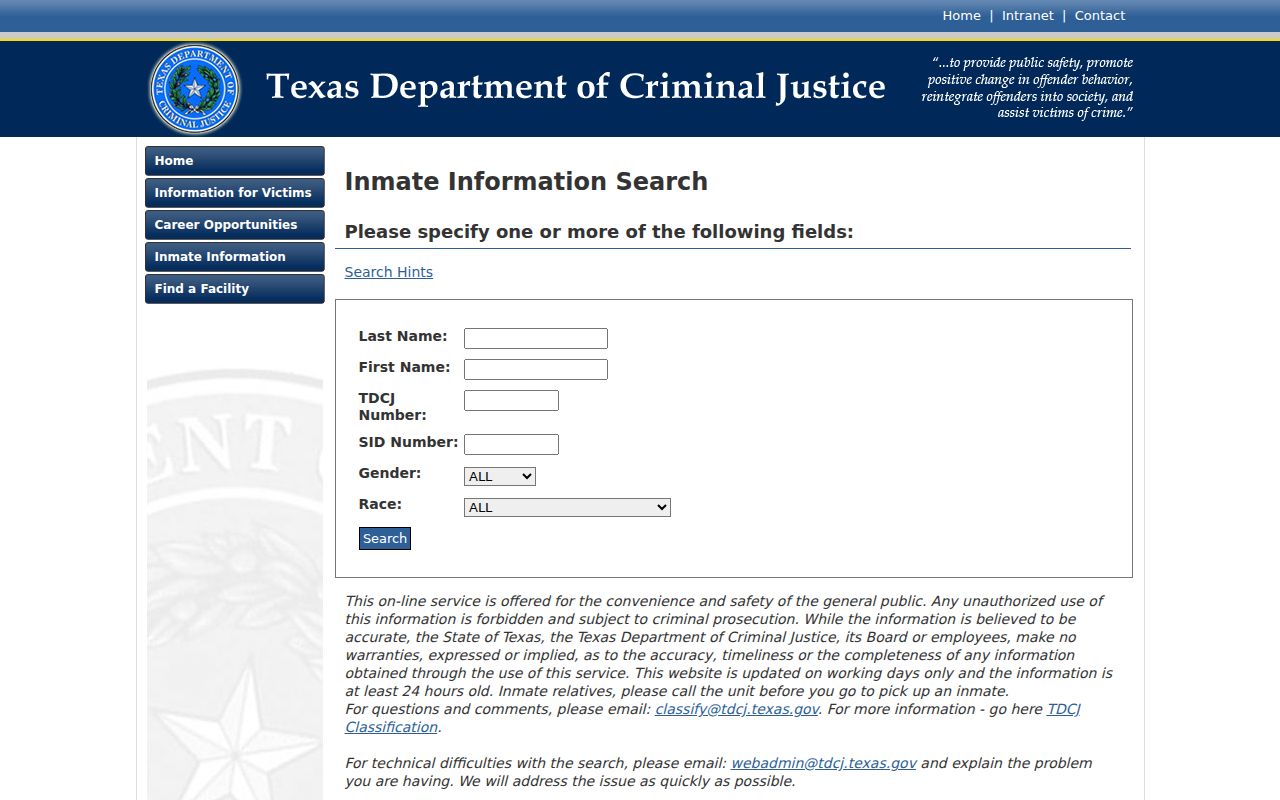
TDCJ becomes relevant after state transfer, while a recent county pretrial booking normally remains outside that locator. Federal custody uses a separate system, and the Federal Bureau of Prisons locator searches federal inmates, not state prisoners or local detainees.
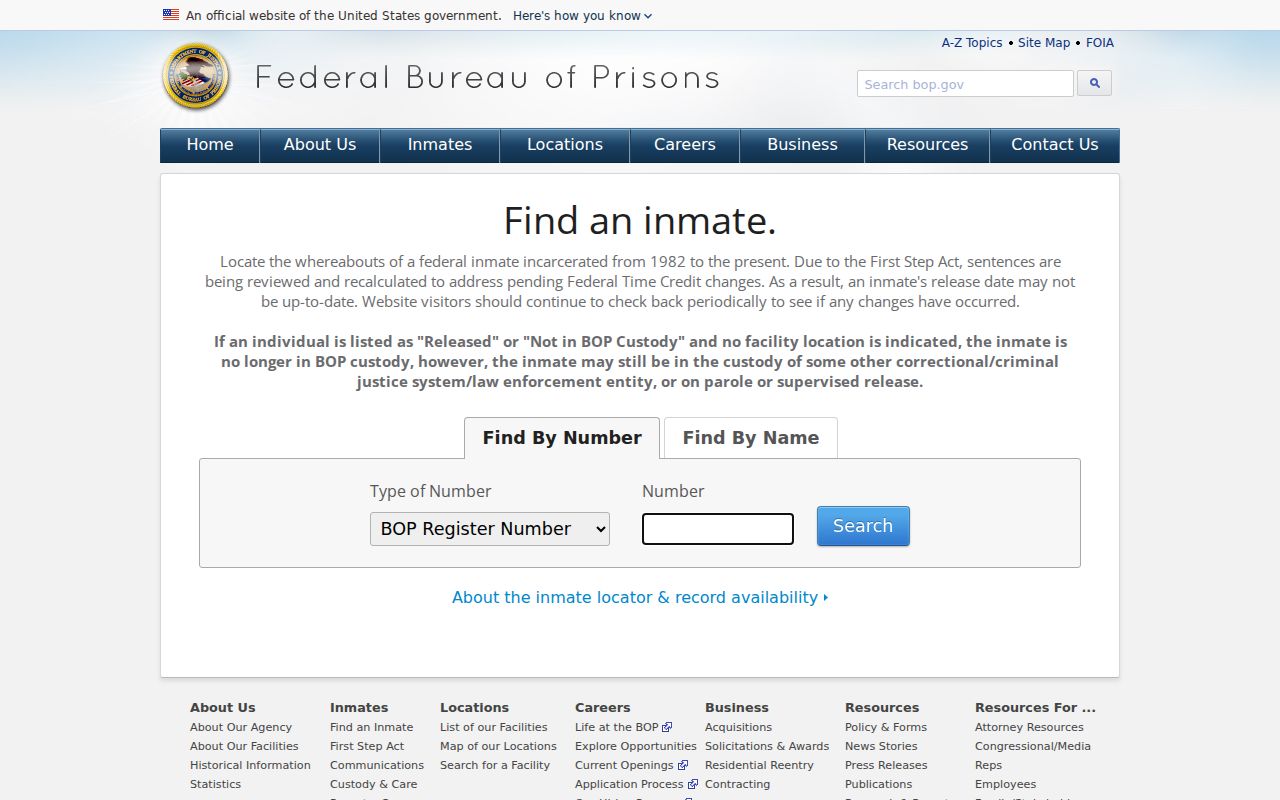
The federal locator is the proper later-stage source only when the custody event belongs to the federal system.
Camp County Arrest Warrant Routes
A warrant arrest joins court process with a booking event. Camp County posts no active-warrant database or public list. Ask the Sheriff at 903-856-6651 about county execution information, then ask the issuing court about the underlying process. The District and County Clerks can check warrant or capias activity filed in their cases. Justice Court at 903-856-3961 handles its fine-only matters, while a Pittsburg city warrant belongs with Municipal Court. A clear answer from one office does not clear process from another court.
When a warrant may be active, call the issuing court to confirm the cause number, status, appearance instructions, and bond method. Obtain a receipt or written order after resolution and allow update time before checking again. Sealed indictments, juvenile warrants, investigative search warrants, and some active-law-enforcement details may remain unavailable. A person should not enter a law-enforcement office on the assumption that a records question prevents arrest.
Arrests Are Not Convictions
The first Camp County booking charge is an allegation recorded at intake. Prosecutors may reject it, reduce it, enhance it, or replace it with a different filed charge. A court may dismiss the case or enter an acquittal, deferred result, or conviction. Only the court file shows that prosecution path. The DPS public name search is also not a current-arrest tool; it focuses on public conviction and deferred-adjudication information reported to the state repository.
| Point | Arrest record | Conviction record |
|---|---|---|
| Created by | Arresting agency and booking office | Court, then reported to DPS as required |
| Shows | Custody and an initial allegation | A judgment of guilt and sentence |
| Held by | Agency and Camp County Sheriff when locally booked | Correct clerk and the state repository when reported |
| Possible later result | Release, no filing, changed charge, or transfer | Sentence, appeal, or later statutory relief |
Note: An arrest is not proof of guilt, and a Camp County booking may end without a filed charge or conviction.
Camp County Fingerprint Record Flow
For a reportable offense, booking staff capture fingerprints and create a tracking or control number that links the arrest event sent to the Texas Department of Public Safety. The prosecutor and clerk later report prosecution and disposition events so the cycle can show what happened. The chain is not automatic or self-correcting. A January 2025 DPS completeness extract showed Camp County agencies reported 14 charges for 2024, three prosecution actions, and no court actions in the displayed measure.
Those numbers measure reporting completeness, not total crime and not the number of cases resolved. They show why a state result can lag behind the Camp County clerk. If a DPS self-review lacks an outcome, collect certified court documents and use the DPS challenge route. A clerk cannot directly rewrite the state repository, while DPS cannot supply a local judgment that was never reported.
Dismissal also does not erase an arrest by itself. Texas Chapter 55A expunction and the separate order-of-nondisclosure remedy have specific eligibility rules. Anyone reviewing their own record should use the complete booking and court file before assessing relief, since all charges from one arrest can affect the result.