
Checking Criminal History in Camp County
No single Camp County search covers every arrest, court filing, disposition, and custody change. Begin with the event type. The District Clerk holds felony files from the 76th and 276th District Courts. The County Clerk holds Class A and B misdemeanor files in the constitutional County Court. The Justice Court and Pittsburg Municipal Court handle the fine-only matters within their own reach. Recent booking questions go to the Camp County Sheriff, while the Texas Department of Public Safety keeps the statewide computerized history built from fingerprints and later agency reports.
Use a full legal name, spelling variants, an approximate date, and a cause or report number when known. Do not treat a name-only match as proof of identity. Follow this order:
- Choose the court or agency that created the record.
- Ask that office to search by cause, report, or booking number; use name and date only when needed.
- Read the charge, status, and disposition as separate fields.
- Compare recent local facts with the DPS statewide result when appropriate.
- Order a certified clerk copy or fingerprint self-review when formal identity or proof is needed.
No One-Box Camp County Search
A booking sheet, court docket, and DPS history describe different parts of the same event. The Sheriff can confirm intake and local custody, but cannot turn an arrest report into a judgment. A clerk can certify the filed charge and outcome in that court, but does not search every Texas arrest. DPS can connect fingerprint-supported cycles from reporting agencies, yet its public name product is narrower than a subject fingerprint review. Searchers get better results by asking a precise question at each stop instead of expecting one portal to act as a complete Camp County rap sheet.
The official Texas trial-court structure shows why court level matters. The captured view below helps place Camp County cases within that structure.

That court hierarchy is the key to choosing between the District Clerk, County Clerk, Justice Court, and municipal court.
Texas Official Background Checks
For review of your own Texas record, the Texas Department of Public Safety Crime Records Division is the central source. Its public conviction name search returns public conviction and deferred-adjudication information reported to DPS. The portal requires an account and prepaid credits. A credit costs $1, and card purchases carry the stated 2.25 percent fee plus a 25-cent transaction charge. The offline name check is $10. Both name routes can return a false match or miss a record, so identity should never rest on name alone.
A fingerprint check through FAST and IdentoGO is the identity-resolved option. DPS lists a $15 record fee plus a $10 fingerprint service fee. No current enrollment center was verified inside Camp County, so use the live locator rather than an old local address. The FAST enrollment service shown below handles appointments.
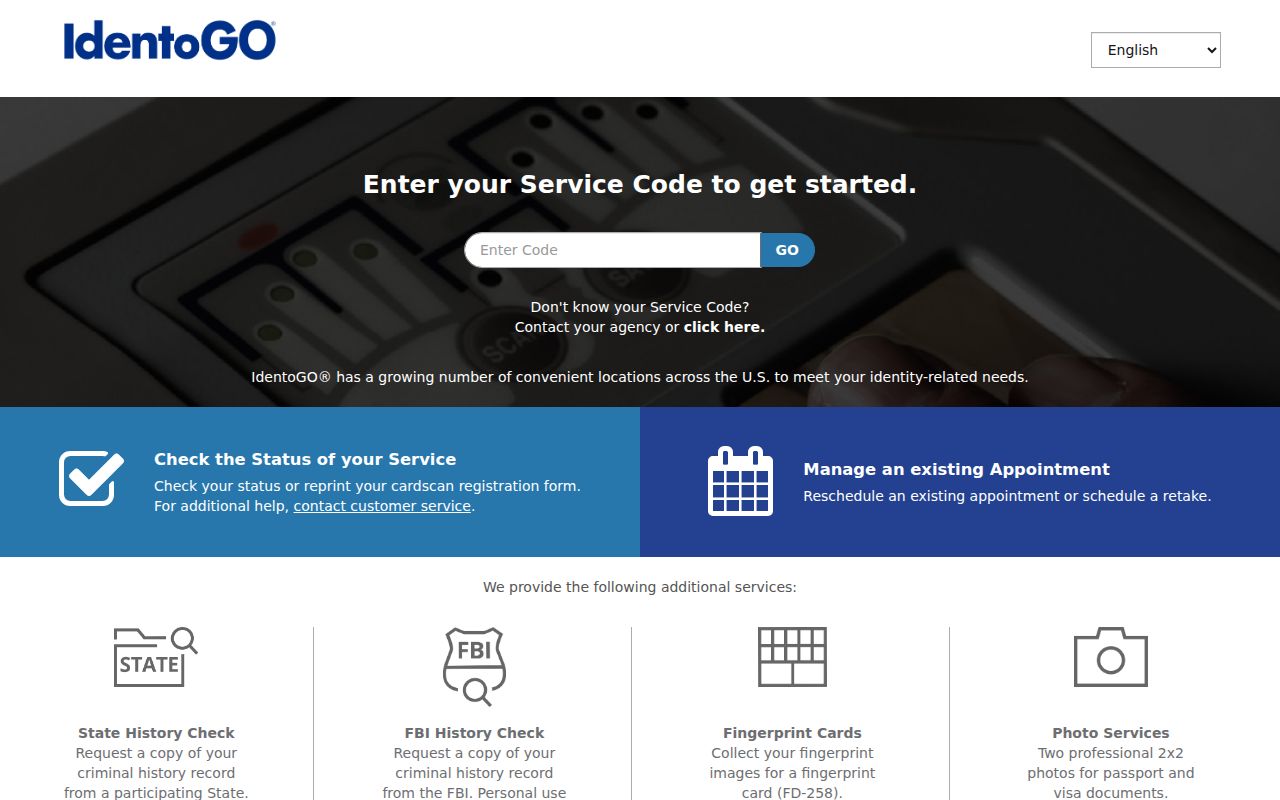
The vendor locator is the reliable way to find the nearest active fingerprint site before traveling from Camp County.
Camp County DPS Search Fields
The public DPS product asks for enough detail to narrow a name, but the user still decides whether a result belongs to the right person. Each new spelling can consume another credit. Date of birth is the strongest name-search detail listed in the research, while sex and race serve as optional filters.
| Field | Use | Search note |
|---|---|---|
| Last name | Required name key | Try a lawful spelling variant only when needed |
| First name | Required name key | A middle name or initial may narrow results |
| Date of birth | Strong identifier | An exact date improves the comparison |
| Sex and race | Optional filters | Use the choices displayed by DPS |
| Search credits | Account balance | A submitted search or result action can use credit |
The DPS criminal-history help page explains account rules and search limits. Its captured help screen reinforces that a returned name is not fingerprint confirmation.

Check the underlying Camp County court file when a DPS result lacks a clear disposition or conflicts with local case data.
Criminal Record Types
Record labels matter because each document has a different owner and purpose. An incident report describes what an officer was told or observed. An arrest report states the basis for custody. Booking records cover intake, initial charges, bond, property, prints, and a photograph. A filed complaint, information, or indictment states the charge that moved into court, which may differ from the arresting officer's first label. The clerk docket then tracks settings, pleas, motions, judgment, sentence, and costs.
- Local reports: created by the Sheriff, Pittsburg Police, or another responding agency.
- Court files: divided among Camp County clerks by charge level and court.
- DPS cycles: assembled from fingerprint, prosecutor, and court submissions.
- Custody files: split among county booking, TDCJ state custody, and federal custody.
- Registry entries: maintained through DPS and the proper local registration authority.
Juvenile, victim, health, sealed-warrant, and protected identity material may be confidential or redacted. Public access never means that all fields must be posted online.
Camp County's Two-Clerk Rule
The courthouse at 126 Church Street puts two vital counters in one building, but they are not interchangeable. District Clerk Kelly Gunn's Room 204 counter holds felony files from the district courts. County Clerk Sandra Knight's Room 102 counter holds criminal misdemeanors filed in County Court. Both offices publish split weekday hours with a lunch closure. Calling first can prevent a wasted trip, especially when shared district judges are scheduled across more than one county.
District Clerk
126 Church Street, Room 204
Pittsburg, TX 75686
903-856-3221
Felony case files
County Clerk
126 Church Street, Room 102
Pittsburg, TX 75686
903-856-2731
County Court misdemeanors
Justice Court
115 Dr. M. L. King Jr. Avenue, Suite C
Pittsburg, TX 75686
903-856-3961
County fine-only matters
Inside a Camp County Criminal Record
A computerized criminal history groups identity data with arrest cycles. One cycle may contain the arrest date, agency, tracking number, charge text, prosecutor action, court cause number, disposition, sentence, confinement, and community-supervision information. The public court record can add attorneys, settings, pleas, fines, and costs. A local booking record often shows more about intake but less about what the prosecutor later filed.
| Name and identifiers | Legal name, aliases, birth data, SID number, and sometimes an FBI number |
|---|---|
| Arrest and booking | Date, agency, tracking or booking number, initial charge, and bond |
| Court charge | Cause number, statute, degree or class, and prosecutor filing |
| Disposition | Pending, dismissal, deferred adjudication, conviction, or acquittal |
| Sentence | Confinement, fines, costs, restitution, or community supervision |
| Custody status | County custody, TDCJ placement, release, or parole data where public |
Missing fields have local importance. A January 2025 DPS completeness extract showed 14 Camp County charges for 2024, three prosecution actions, and no court actions in the measured columns. That is a reporting-quality snapshot, not a crime count and not proof that no case ended.
Three Camp County Custody Systems
The Camp County Sheriff does not publish an official county inmate roster or booking log. Its official page directs custody searches to VINELink and gives the main number, 903-856-6651. The county budget funds three jailer positions and has reflected out-of-county inmate housing, so a caller should ask where a person is physically held. A blank VINELink result can reflect release, transfer, delayed data, spelling, or nonparticipation.
State prisoners belong in the TDCJ Online Inmate Search, while federal prisoners belong in the Bureau of Prisons locator. Those tools are not substitutes for a Camp County booking sheet. TDCJ may show sentence and parole dates, facility, offense, and county of conviction, but not a local booking photo or full clerk docket. The broader Camp County arrest lookup explains how to move among each custody channel without confusing an arrest with a conviction.
Public Access Laws in Texas
The Texas Public Information Act lets a person request existing public records without using special words. It does not require an office to answer legal questions or make a new report. When the Sheriff has no portal, a narrow written request can identify the report type, date, place, agency, report number, desired format, and cost ceiling. The office may redact protected data or seek an Attorney General decision when an exception applies.
Key Texas rules: Government Code Chapter 552 creates the public-information framework and includes the law-enforcement exception in Section 552.108. Government Code Chapter 411 controls criminal-history dissemination, DPS public conviction access, and nondisclosure. Code of Criminal Procedure Chapter 55A governs expunction. Family Code Chapter 58 protects many juvenile records.
Ask the producing agency for its own report. Pittsburg Police retains city incident narratives even when the Sheriff keeps the related booking sheet.
Camp County Warrant Record Routes
Camp County publishes no active-warrant database or public warrant list. Check the court level that could have issued the process. The Sheriff can address county execution information at 903-856-6651. The District and County Clerks can check filed docket activity for a warrant or capias in their courts. Justice Court handles its fine-only matters at 903-856-3961, while city warrants must be checked with Pittsburg Municipal Court. A no-case answer from one office does not clear process from another court.
To resolve a possible warrant, contact the issuing court rather than relying only on the arresting agency. Confirm the cause number, status, bond or appearance instructions, and accepted resolution method. Obtain a written receipt or order and allow time for each system to update. Sealed indictments, juvenile process, search warrants tied to an investigation, and some active law-enforcement details may not be public. Do not enter a law-enforcement office on the assumption that asking a question prevents an arrest.
Camp County Booking to DPS
A reportable arrest begins with the arresting agency's report. The booking agency then takes fingerprints and creates the tracking data sent to DPS. A prosecutor may decline the case, file an information, or seek an indictment. Next, the clerk reports court activity and the final disposition back to the state repository. The process can be read as one line: Arrest report → booking and fingerprints → prosecutor decision → clerk case → DPS disposition update.
That chain is not automatic perfection. A new arrest may exist at the Sheriff before a court cause number appears. A finished Camp County case may be clear in the clerk file while DPS still lacks its final court action. When records disagree, obtain the certified local document and follow the DPS record-review and challenge route. The clerk cannot directly rewrite the state database, and DPS cannot invent a judgment that was never sent.
The Texas conviction search provides the public statewide layer shown below.
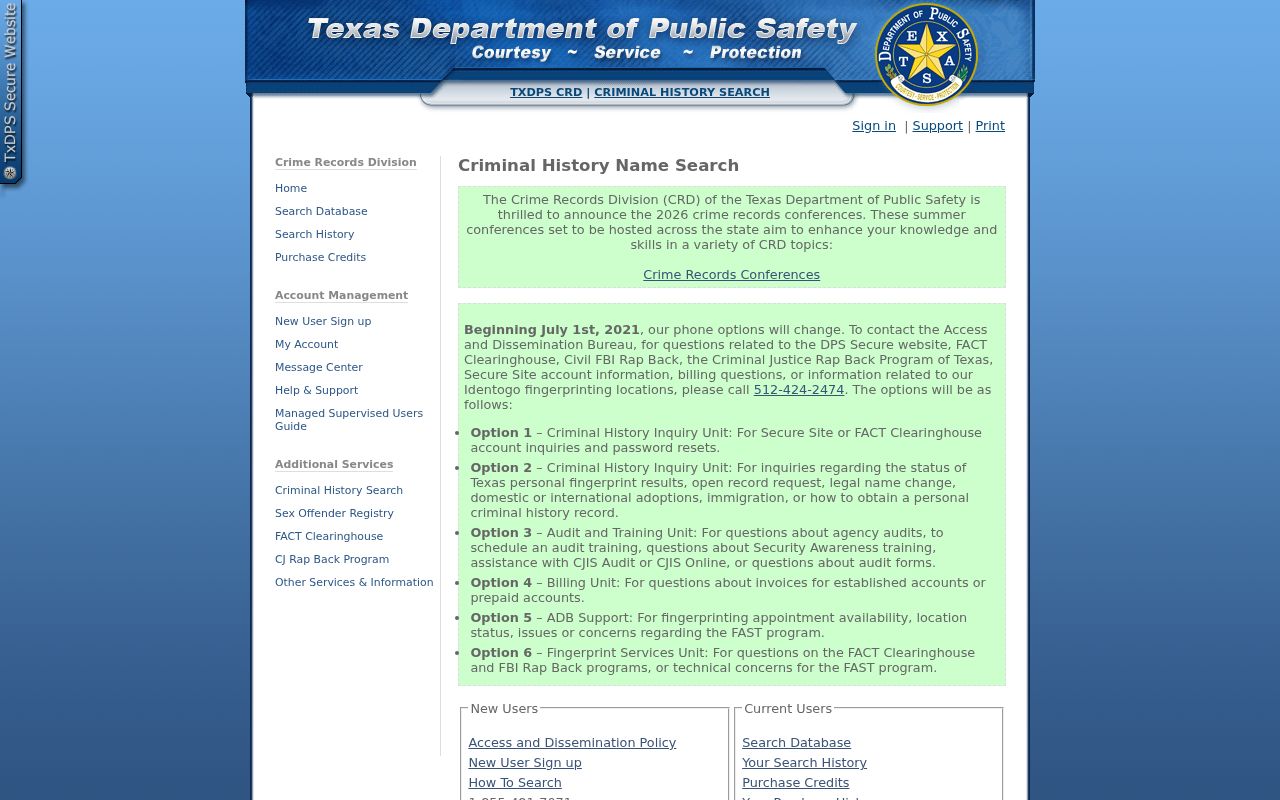
Use it as one layer, then confirm any Camp County result with the office that filed the source record.
Camp County Criminal Charge Classes
Texas offense class helps select the right Camp County court. Capital, first-degree, second-degree, third-degree, and state-jail felonies belong in District Court. Class A and B misdemeanors generally route to the constitutional County Court. Class C charges are fine-only by default and can fall within Justice Court or Pittsburg Municipal Court jurisdiction. An arrest label can change after prosecutor review, and an enhancement based on the statute or prior history can alter the range.
| Texas class | Ordinary range | Camp County court |
|---|---|---|
| First-degree felony | 5 to 99 years or life; fine up to $10,000 | District Court |
| Second-degree felony | 2 to 20 years; fine up to $10,000 | District Court |
| Third-degree felony | 2 to 10 years; fine up to $10,000 | District Court |
| State-jail felony | 180 days to 2 years; fine up to $10,000 | District Court |
| Class A or B misdemeanor | County jail and fine ranges under Chapter 12 | County Court |
| Class C misdemeanor | Fine up to $500 | Justice or Municipal Court |
The current Texas Penal Code Chapter 12 controls the ordinary ranges. Fine-only does not mean that a charge is noncriminal, and a state-jail felony remains a felony.
Sealed, Expunged, and Restricted Records
Texas expunction and nondisclosure do different work. Chapter 55A expunction is narrow and tied to an arrest event. It can cover certain acquittals, pardons, no-billed or dismissed matters, and other listed situations after statutory conditions are met. It is not a general way to erase every completed sentence. Because multiple charges from one arrest can affect the analysis, the complete Camp County clerk file matters.
An order of nondisclosure limits public release but does not destroy every government record. Listed agencies may still have access. Eligibility turns on the offense, result, and prior history. District-level petitions in Camp County normally route through the District Clerk in Room 204. The posted 2022 fee sheet lists $22 per agency for expunction notices and $28 for an automatic nondisclosure entry, but it does not state one complete current petition price. Confirm current totals and the service list before filing.
- Expunction
- A court remedy that removes or returns covered arrest records under the order.
- Nondisclosure
- A separate order that limits public dissemination while preserving access for agencies named by law.
- Deferred adjudication
- A plea with the finding held back during supervision; it can remain public absent relief.
- Disposition
- The recorded outcome of a charge, such as dismissal, conviction, or acquittal.
Camp County's Parole Connection
Texas calls probation community supervision. The Camp County judgment shows whether a court imposed it and for how long, while detailed supervision notes are not the same as a public docket. Parole begins after state imprisonment and follows a different chain. The Texas Board of Pardons and Paroles makes release decisions, and the TDCJ Parole Division supervises releasees. Camp County is assigned to the Mount Pleasant District Parole Office in Region I. The official TDCJ county assignment list documents that connection.
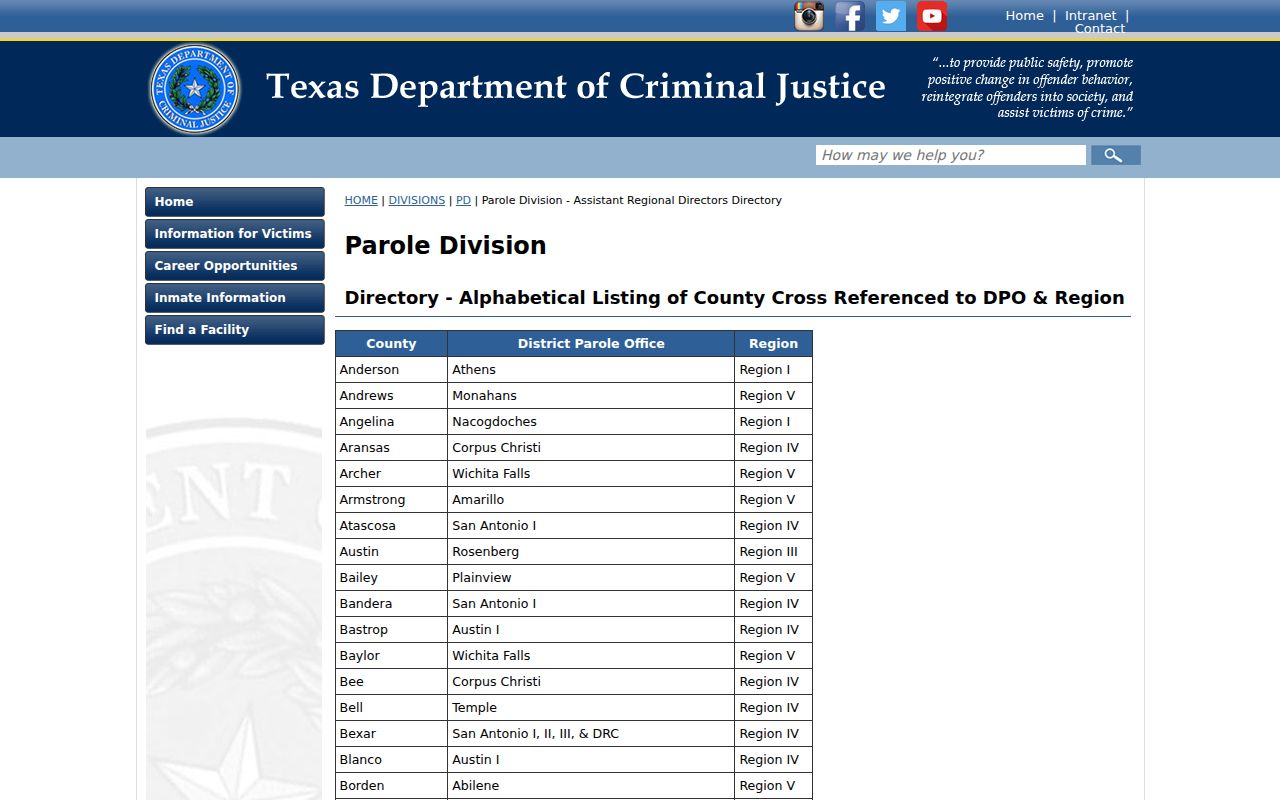
The assignment explains why a Camp County supervision question may lead to a Mount Pleasant state office even though the court judgment stays in Pittsburg.
The Texas Board of Pardons and Paroles publishes release information and current notices.
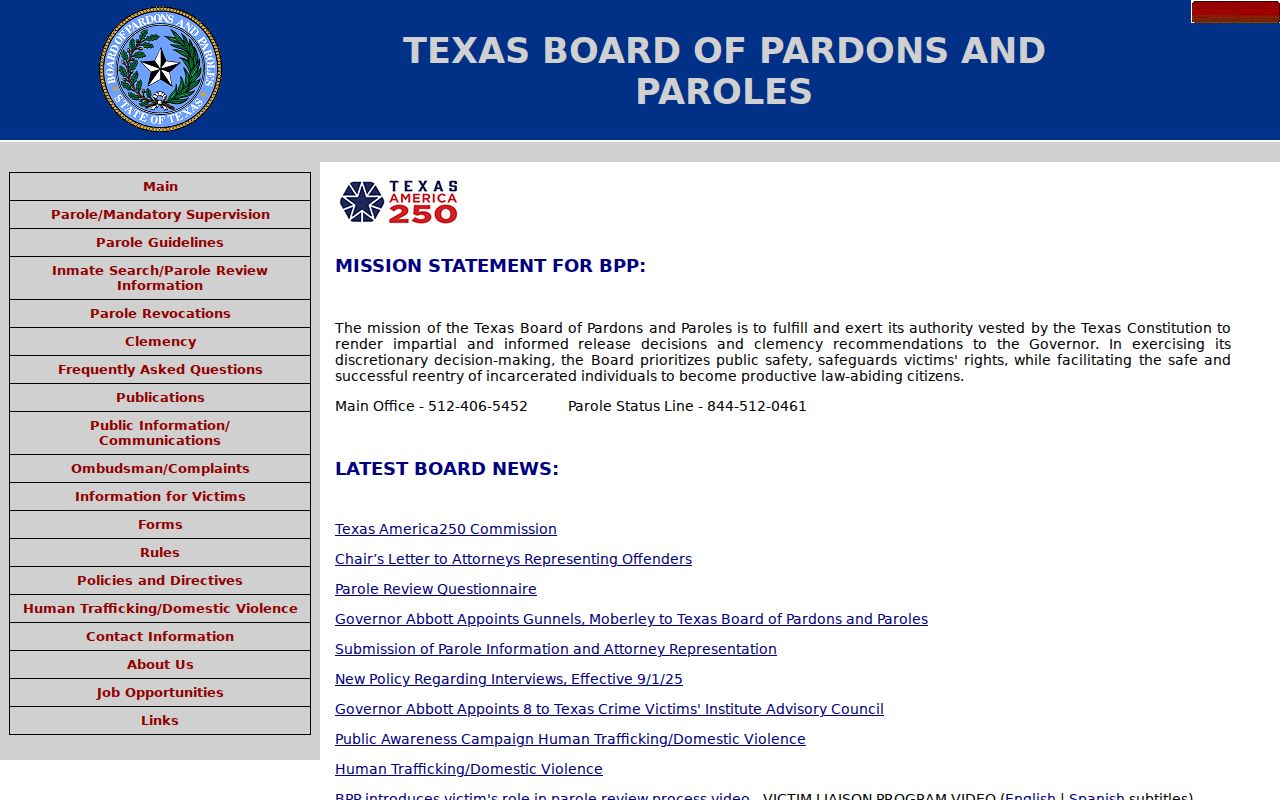
Use the Board for decision status and TDCJ for custody or supervision data, then use the clerk judgment for the underlying Camp County sentence.
Federal Records from Camp County
Federal cases from Camp County fall within the U.S. District Court for the Eastern District of Texas. They do not appear as complete files at the Camp County courthouse. PACER is the official federal docket and document channel after registration. It ordinarily charges ten cents per page with a $3 document cap, and current policy waives quarterly fees of $30 or less. Federal custody belongs in the Bureau of Prisons locator rather than TDCJ. The Eastern District of Texas is the official court source illustrated below.
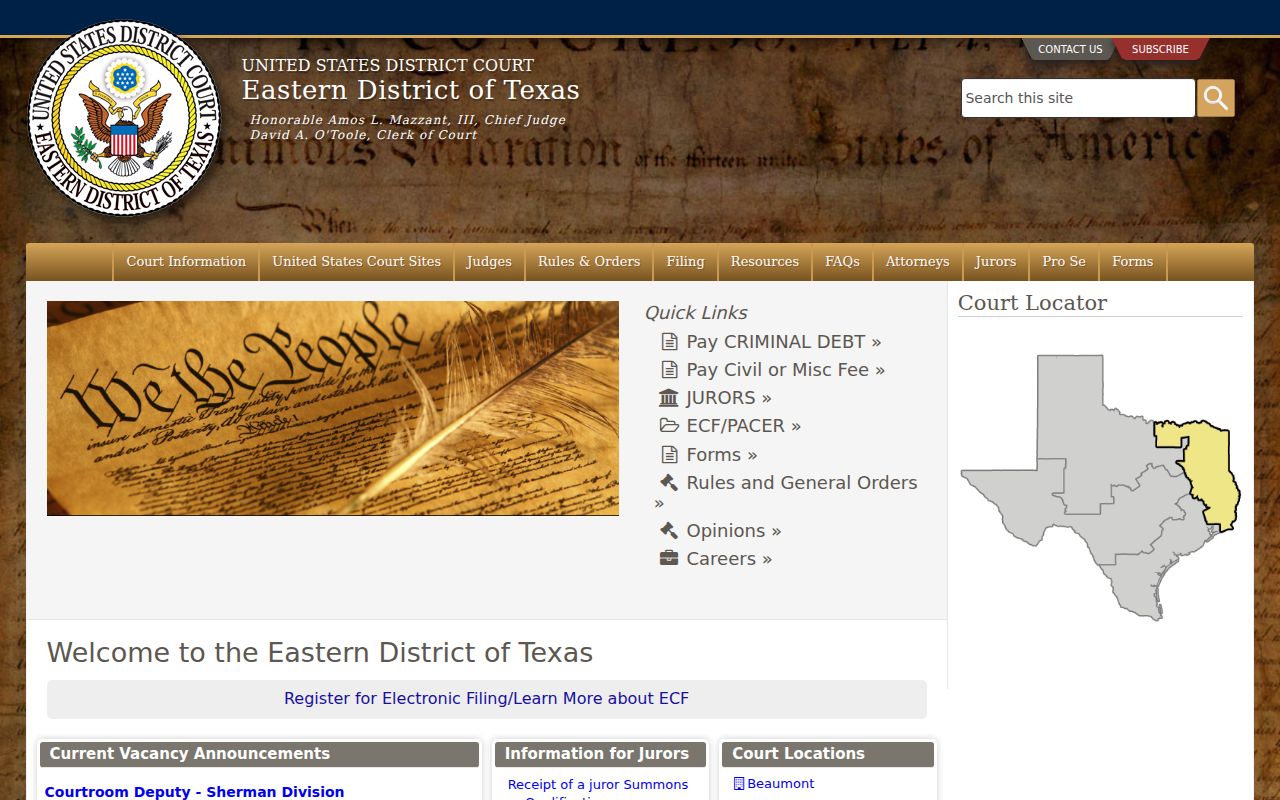
This federal layer is separate from the 76th and 276th District Courts, which are Texas state trial courts.
For federal docket access, the PACER service supplies the official account and billing route.
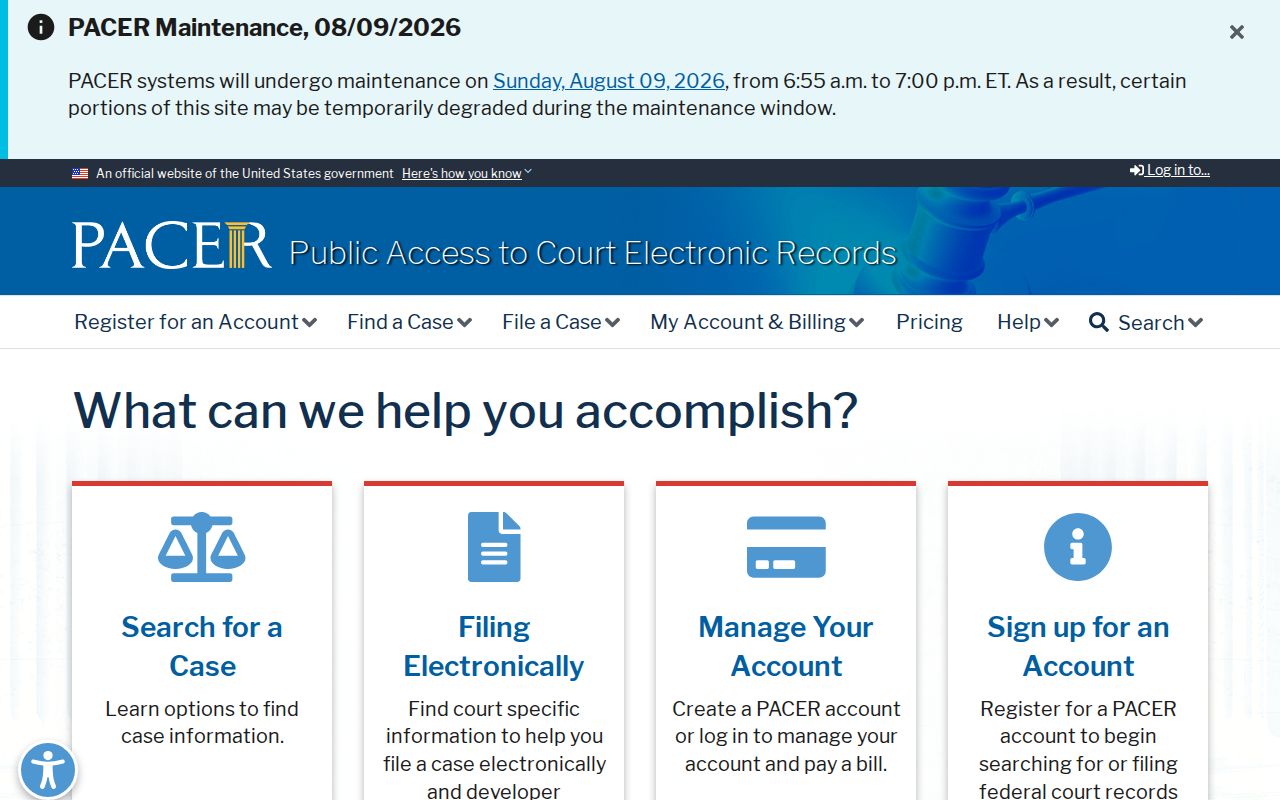
A PACER docket can show filed federal documents, but it does not replace a fingerprint-based FBI Identity History Summary for self-review.
Camp County Criminal Records by City
Official Census geography identifies only two incorporated places in Camp County. Pittsburg has the county's verified city police and municipal-court layer. Rocky Mound has no separate police department, municipal court, official records portal, or jail found in the research, so its residents use the Sheriff, issuing court, county clerks, and state systems. These are the only city guides required; Leesburg and Newsome are not added as substitute cities.
Pittsburg Criminal Records
County seat with Pittsburg Police, Municipal Court, and nearby Camp County record counters.
Rocky Mound Criminal Records
Small incorporated town served through county, issuing-court, and state record channels.
Use each guide for the local starting point, then move to a Camp County clerk or DPS only when the record has reached that level.